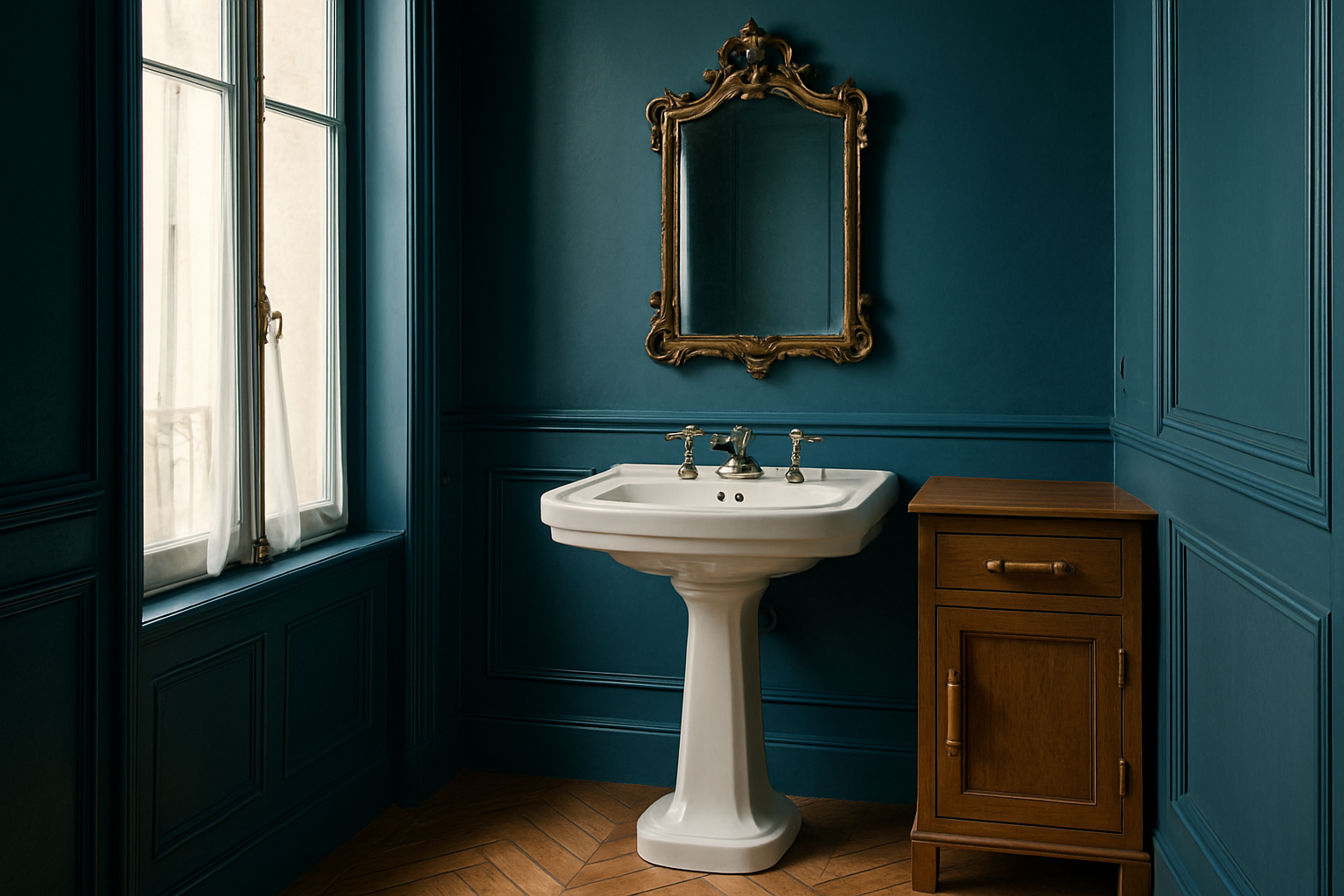
Answer: The recent renovation of a historic Parisian apartment by two gallerists demonstrates what many Southern California homeowners forget: respecting your home's character doesn't mean being stuck in the past. Their use of bold peacock blue paint and sustainable bamboo hardware shows how thoughtful material choices and color can transform a bathroom while maintaining its soul. The lesson? Stop playing it safe with builder-grade beige.
The Parisian Approach: Bold Color in Historic Spaces
Here's the deal. These Parisian gallerists did something most homeowners are terrified to do: they went BOLD with color in a historic space. Peacock blue. Not safe gray, not trendy greige, but actual color. And you know what? It worked because they understood something fundamental about bathroom renovations.
Color creates personality, and bathrooms need personality 💡. Think about it. Your bathroom is where you start and end every day. It should feel intentional, not like a sterile hotel. If you're remodeling a bathroom in an older Southern California home (we've got plenty with character from the 1920s-1960s), consider jewel tones like deep blues, emerald greens, or rich terracottas. These colors actually HIDE water spots and soap scum better than white tile anyway. Boom. Beautiful and practical.
But here's the reality: you need proper ventilation and moisture-resistant paint formulations. Bold color in a poorly ventilated bathroom becomes a mold factory. We see this constantly with DIY projects that look gorgeous for six months, then... disaster.
Sustainable Hardware: The Bamboo Revolution
The bamboo hardware choice in that Parisian renovation isn't just trendy aesthetic nonsense. It's actually smart 🚀. Bamboo is naturally moisture-resistant, sustainable (it grows like crazy), and brings warmth that chrome and brushed nickel can't match.
Basically, we're seeing a huge shift away from the cold, clinical bathroom look. Homeowners are tired of spaces that feel like operating rooms. Natural materials like bamboo, teak, and even cork are making comebacks in bathroom vanities, cabinet pulls, toilet paper holders, and towel bars. These materials work especially well in Southern California because our climate is similar to their native environments.
The catch? Not all bamboo products are created equal. You need strand-woven bamboo for durability, and proper sealing for wet areas. Cheap bamboo hardware from big-box stores will warp within a year. Ask me how I know 😭. We've replaced plenty of them during renovations when homeowners thought they were saving money upfront.
Honoring History While Adding Function
Look, I get it. You love your home's vintage charm, but you also want a walk-in shower and decent storage. The gallerists' renovation shows this balance is possible, but it requires actual planning.
If you're working with a historic or older bathroom, start by identifying what's worth keeping. Original tile in good condition? Keep it and build around it. Clawfoot tub? Refinish it instead of replacing it. Beautiful floor plan with terrible fixtures? Update the fixtures while maintaining the layout. This approach saves money AND preserves character.
For aging-in-place considerations (which basically everyone should be thinking about), you can add accessibility features without destroying historic character. Curbless showers can be designed to look intentional, not institutional. Grab bars now come in oil-rubbed bronze, brass, and even bamboo finishes that look like towel bars. Nobody needs to know you're planning ahead.
Practical Takeaways for Your Bathroom Remodel
Here's what you can actually apply from this Parisian renovation to your Southern California bathroom project:
- Embrace color strategically: Use bold paint colors on walls with proper moisture barriers and ventilation. Save the white subway tile for accent areas, not entire bathrooms.
- Choose sustainable materials that perform: Bamboo, teak, and cork aren't just eco-friendly buzzwords. They're legitimately moisture-resistant and add warmth. Just verify quality before purchasing.
- Balance preservation with function: Keep architectural details that matter (original tile borders, interesting layouts, quality fixtures) while upgrading the stuff that doesn't work (outdated vanities, poor lighting, inadequate storage).
- Plan for accessibility NOW: Even if you're thirty years old, install blocking for future grab bars, consider a curbless shower threshold, and make sure your vanity height works for various users.
Why This Matters for Southern California Homeowners
Southern California has thousands of homes with architectural character from Spanish Revival to Mid-Century Modern. These homes deserve renovations that respect their bones while meeting modern needs. The Parisian approach works here because we share similar values: quality over quantity, sustainability, and spaces that feel personal rather than flipped-for-profit generic.
The reality? Most contractors will push you toward the cheapest, fastest solution. Builder-grade everything. Gray LVP flooring. White subway tile from floor to ceiling. It's profitable for them and safe for resale... but it's boring as hell and doesn't honor your home's potential.
Your bathroom renovation should reflect YOUR life in YOUR home. Not some imaginary future buyer's theoretical preferences. If peacock blue and bamboo make you happy every morning, that's what matters. Just make sure it's done right with proper materials, ventilation, and waterproofing. Because a beautiful bathroom that develops mold isn't beautiful for long.
Ready to transform your home? Contact Freedom Design & Remodel at (619) 779-2296 for a free estimate. Veteran-owned and operated, serving Southern California.
Frequently Asked Questions
Can I use bold colors in a small bathroom without making it feel cramped?
Absolutely. Dark, saturated colors like peacock blue or emerald green actually create depth when paired with good lighting and reflective surfaces like large mirrors. The key is using the color intentionally on one or two walls rather than everywhere, and ensuring you have adequate lighting (both natural and artificial). Small bathrooms feel cramped due to poor lighting and clutter, not color choice.
Is bamboo hardware durable enough for a high-use bathroom?
Yes, but quality matters significantly. Strand-woven bamboo that's been properly treated and sealed can handle bathroom moisture and daily use for decades. However, cheap bamboo products from discount retailers often aren't properly processed and will warp or split within a year. Look for manufacturers that specifically rate their bamboo products for wet environments and offer warranties.
How do I balance historic character with modern accessibility features in a bathroom remodel?
Focus on integrating accessibility features that don't scream 'medical equipment.' Curbless showers can be designed with decorative tile borders that look intentional. Grab bars now come in finishes like oil-rubbed bronze and brass that match historic fixtures. Comfort-height toilets are standard now. The key is working with a designer who understands both historic preservation and universal design principles, rather than treating them as opposing goals.